
When and how should we use Acts as a guide for the contemporary church?
Iain M. Duguid
(Adapted from:https://www.crossway.org/articles/what-would-the-apostles-do-how-and-when-to-use-acts-as-a-guide-for-the-contemporary-church/)
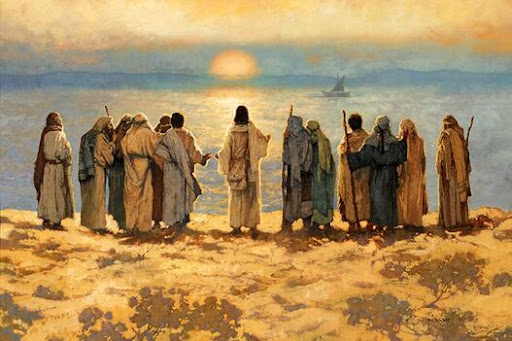
What would the apostles do?
A few years ago, a popular trend among Christians was to wear bracelets bearing the letters WWJD? The idea was to remind the wearer to ask, in every situation, “What would Jesus do?” and then act accordingly. We can certainly appreciate Christians’ desire to resemble Christ in their relationships. Critics, however, identify an obvious weakness: we cannot and should not always do what Jesus did. He healed the sick and raised the dead, extraordinary gifts that have not been given to us. His unique calling allowed him to send his disciples fishing to find money for the temple tax (Matthew 17:24-27). Unfortunately, that is not an approach we can use to pay our taxes. More precisely, we do not need to use it, because we live at a different point in the history of redemption.
We face similar challenges when interpreting Acts. From the earliest days, Christians have tried to follow the example of the Jerusalem church in Acts 2:42-47. Much there deserves imitation: the new believers’ devotion to the apostles’ teaching, fellowship, breaking bread together and daily prayer, both publicly and in their homes. These are beautiful signs of the Spirit’s work in their hearts. Yet although some Christian groups have copied the Jerusalem believers’ sharing of possessions to help people in need (Acts 2:45), most churches do not regard that arrangement as a universal pattern. They observe that communal ownership was not practised throughout the early church. Later in Acts, churches founded by Paul function differently. The wealthy Lydia, for example, retains ownership of her large house in Philippi (Acts 16:14-15). She generously welcomes Paul and his team, but the house remains hers. When Paul raises money for poor Christians in Jerusalem, he does not expect the Corinthians to give away everything. He asks them to give generously in proportion to their means (1 Corinthians 16:2).
The apostles also played a distinctive, foundational role in the early church (compare Ephesians 2:20). The whole church spread the gospel, proclaiming the good news wherever persecution scattered them (Acts 8:1-4). But the apostles had a unique ministry as eyewitnesses of the risen Christ, confirmed through signs and wonders. Peter and John healed a lame man outside the temple, clearly fulfilling Isaiah 35:6 (see Acts 3). This demonstrated the power of the name of Jesus Christ of Nazareth (Acts 3:13), a recurring theme in the healings in Acts (see Acts 3:6; 4:10, 30). It was one of many signs and wonders performed among the people through the apostles (Acts 5:12). These miracles authenticated them as Jesus’ authorised witnesses, continuing the work of the risen and ascended Jesus in the world through his Holy Spirit. By contrast, when Paul instructs Timothy and Titus about second-generation ministry in the pastoral letters, he does not tell them to perform signs and wonders. He tells them to proclaim the word faithfully at all times (2 Timothy 4:2). Their ministries would differ from those of the apostles.
How, then, do we know which parts of Acts are intended as examples for us? First, remember that Acts is narrative, a genre that teaches indirectly rather than giving the direct instruction found in the letters. Biblical narratives show good and bad behaviour without always explicitly labelling it. Readers are expected to interpret the stories in the light of the rest of Scripture. Sometimes the lesson is obvious, as with Ananias and Sapphira. At other times it is less clear. When Barnabas and Paul disagreed so strongly over John Mark that their team split (Acts 16:36-40), who was right? Was Paul right to fear that an unreliable co-worker would undermine the team, since Mark had abandoned them on their first journey (Acts 16:38)? Or was Barnabas right to offer Mark a second chance, remembering that Mark was his cousin (Colossians 4:10)? Acts leaves this unresolved. In the light of the wider New Testament, Barnabas appears to have been right: Mark later worked with Peter and wrote a Gospel. Even Paul came to value and trust him towards the end of his life (2 Timothy 4:11). This should encourage us to offer second chances, but not every ministry situation calls for the same response. Perhaps the more secure lesson is that God remains sovereign even over sharp disagreements within the church and can bring good from our sinful quarrels - in this case, two effective ministry teams rather than one.
Three applications
These examples show how complicated it is to learn the right lessons from the book of Acts of the Apostles. Here are some guidelines that will help you determine what the right applications can be:
If an application is consistent with a Bible command from another place in the Scriptures, it is likely to be valid. On the other hand, if it contradicts a direct Bible command, it is probably not appropriate.
Have you considered the unique calling of those involved? The apostles and prophets do in Scripture things that are not necessarily expected or even acceptable to other believers.
Are these events part of a unique sequence in redemption’s history, rather than a pattern for every period of church history? Pentecost in Acts 2, for example, reverses the division at Babel (Genesis 11:1-9). There, the nations were separated and their languages confused. In Christ those old divisions are removed: the nations become one people, a new Israel in Christ (Ephesians 2:11-22; Galatians 3:28), while retaining their different languages. The unique outpouring of the Spirit at Pentecost extends outward as the gospel spreads from Jerusalem to the Gentiles (Acts 1:8). The Spirit first comes to Gentiles close to Israel in Acts 10, then to those farther away in Acts 19, accompanied in each case by the distinctive signs of prophecy and tongues (Acts 10:46; 19:6). Elsewhere, however, the gospel reaches a new city or community without such signs. The foundational sign that Gentiles have received the Spirit need not be repeated indefinitely, and similar signs should not be expected in every later generation.
Applying these principles requires wisdom. Narratives are not always easy to apply, especially given the cultural and historical distance between the first-century church and ourselves. Yet this period of church history is worth studying. We can learn much from what the early church did well and poorly, and above all from seeing God at work among his people, sometimes through dramatic miracles and sometimes through the hidden workings of ordinary providence. The Lord continues to work in his church through his Spirit and will remain with us to the end of the age.